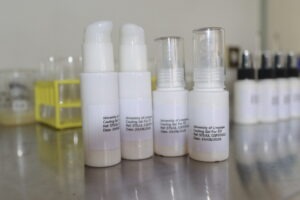

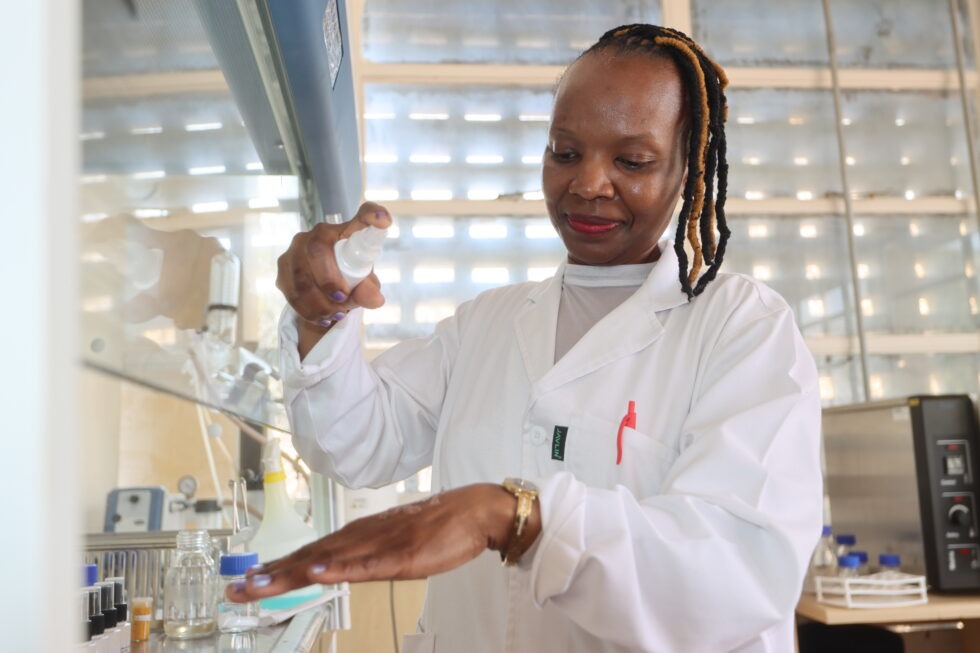
Professor Mamokone Mahlo is developing herbal gel and tonic prototypes as part of research into ‘U wela’, a little-understood condition traditionally reported among men in Limpopo’s Vhembe District.
By Reuben Maake
reuben.maake@ul.ac.za
For generations, traditional medicinal plants have been used to manage a range of ailments in communities across Limpopo. At the University of Limpopo (UL), a researcher is now putting this traditional knowledge to scientific investigation in the search for potential treatments for ‘U wela’, a condition traditionally reported among Venda men in the Vhembe District. The condition remains poorly documented in scientific literature, with limited information available about its causes, progression and management. Within affected communities, it is traditionally believed to have potentially fatal consequences if left untreated.
Leading the research is Professor Mamokone Mahlo, a C2-rated researcher recognised by the National Research Foundation, based in UL’s Department of Biodiversity. She has developed prototype herbal formulations, comprising a gel and a tonic, using medicinal plants identified for their potential therapeutic properties. The project, titled Herbal Formulation for ‘U wela’, has received R890,000 in funding from the Technology Innovation Agency to support the development of the formulations.
According to Prof Mahlo, symptoms associated with the condition have been described as including weight loss, dry mouth, a prominent vein on the forehead and swelling of the genital area. She explained that microorganisms, including bacteria and fungi found on the skin or near the mucous membranes of the genital region, may be involved in infections associated with the condition. However, further investigation is needed to establish a clearer scientific understanding of ‘U wela’ and its underlying causes.
From traditional knowledge to laboratory testing
The research team collected medicinal plants in Limpopo’s Capricorn District, working with an expert collaborator in traditional knowledge to identify the plants and inform the investigation. The plant materials were subsequently subjected to phytochemical, microbiological and pharmacological analyses to investigate their properties and potential therapeutic applications. The project has since progressed to formulation development. Extracts from two medicinal plants, referred to as Plant A and Plant B, were used to produce the prototype gel and tonic. Initial laboratory tests found that extracts from both plants showed no cytotoxic effects on Vero cells at the concentrations tested. These findings provide an initial indication of their compatibility with the cells under the specific laboratory conditions, but do not establish that the formulations are safe for human use. Further analyses were conducted on the extracts to assess their biological properties and suitability for incorporation into the formulations.
While the findings have enabled the development of the prototypes, Prof Mahlo emphasised that the research has not yet produced a finished treatment. She described Plant A and Plant B as promising botanical candidates for the discovery and development of potential therapeutic agents for managing ‘U wela’ in humans.
Further testing before human use
Both the gel and tonic are undergoing efficacy and stability testing to establish their performance and shelf life. Additional safety assessments and the necessary regulatory processes will be required before clinical trials can determine whether the formulations are safe and effective for human use.
Prof Mahlo stressed that more scientific research into ‘U wela’ is essential, particularly given the limited information available about the condition in Limpopo. “Further scientific investigation is needed to better understand the condition and to evaluate the potential use of traditional medicines for its management and treatment,” she said. Beyond developing the formulations, the research seeks to contribute to a better understanding of a condition that has largely remained within the realm of traditional knowledge, while investigating whether medicinal plants could offer a scientifically supported approach to its management.
If the formulations are demonstrated to be safe and effective, and the necessary intellectual property protection is secured, Prof Mahlo intends to commercialise the gel and tonic at an affordable price. For now, the research remains a work in progress, with laboratory testing and further scientific investigation standing between promising plant extracts and a treatment that could eventually benefit affected communities.